


Aphid Management Masterclass – Common Aphid Species Found on Ornamental Crops – Aphid Biology, Lifecycles, and Identification
A presentation listing the various common aphid species which impact ornamental crops and how to identify them.

‘Summary of the HTA Grower Technical Masterclass: ‘Aphid management in ornamental crops’
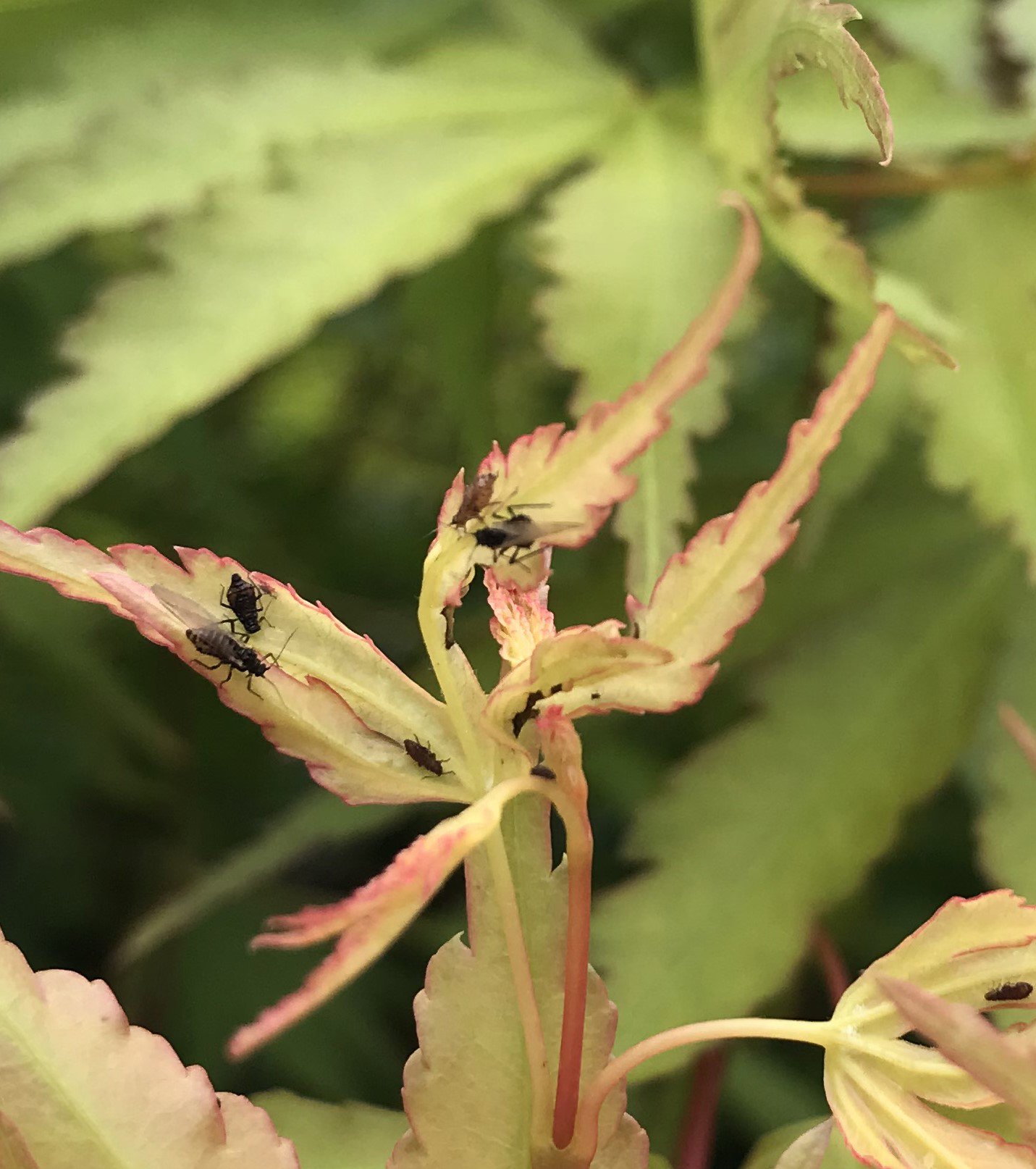
Aphids are a key pest of ornamentals, affecting not only the foliar parts of plants, but also growing points, shoots, stems, and roots too. Aphids impact plant quality by their feeding and the generation of honeydew; they transmit several plant viruses, and just their presence (especially with woolly aphids) can lead to product rejection by customers. Some aphid species have a wide host range and are common on nurseries, others are host specific. Some may feed on related hosts throughout the year, while others switch between unrelated hosts as part of their annual life cycle.
Aphid identification is important for two key reasons. Firstly, if using plant protection products to achieve control, some species of aphid, such as the peach-potato aphid (Myzus persicae) and the melon and cotton aphid (Aphis gossypii), exhibit resistance to pyrethroids (such as Decis Protech, Hallmark with Zeon Technology and Sumi-Alpha) and pirimicarb (Aphox). Secondly, if control is based on macro-biological agents, then the efficacy of the various available aphid parasites varies between aphid species.
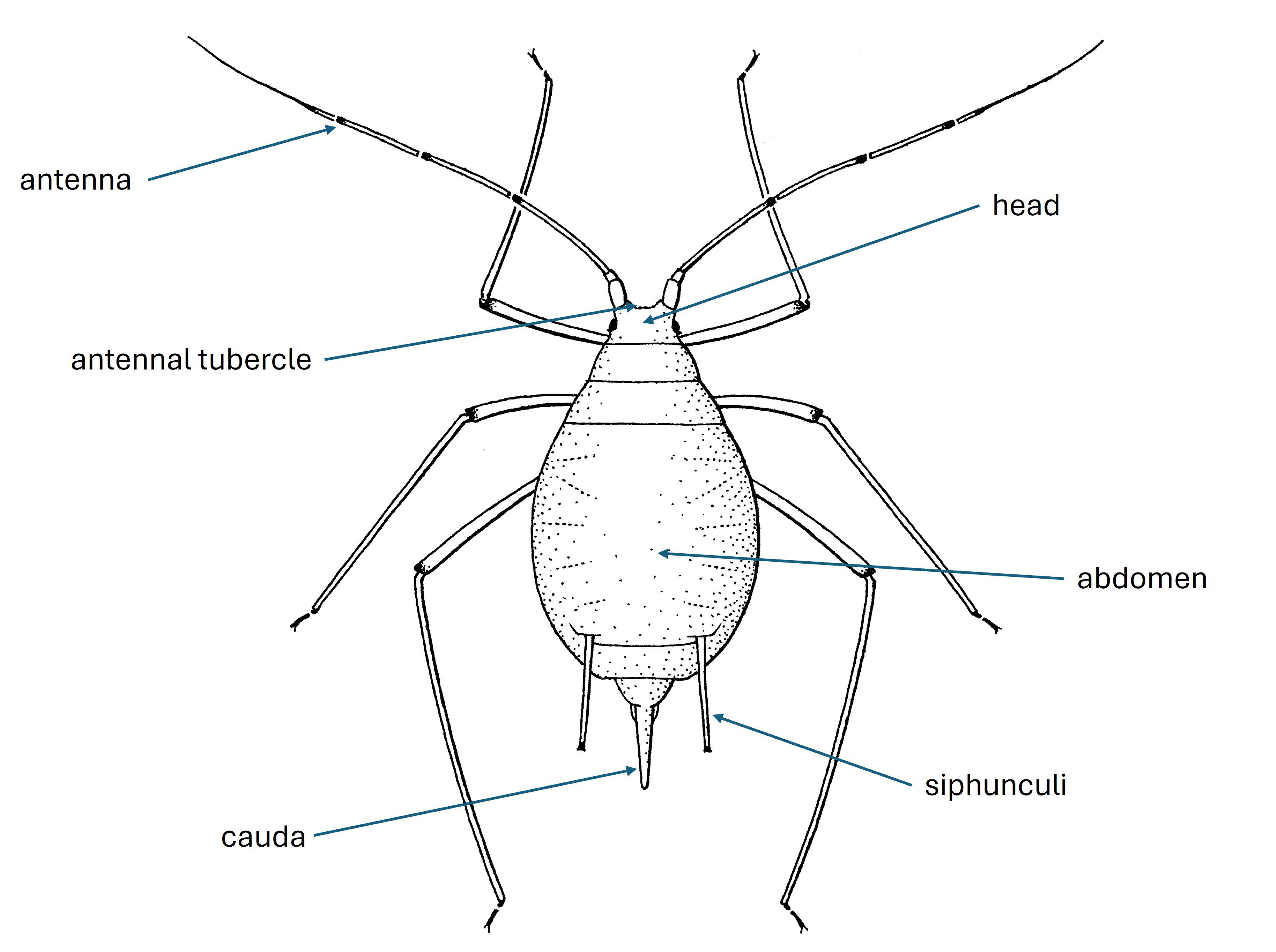
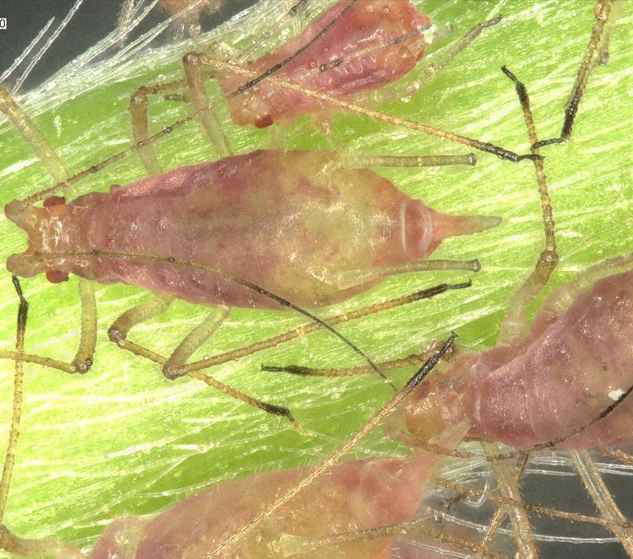
As aphids often have various morphs, body colour is not always a precise guide to identification. Host plants can assist, but in the case of generalist feeders it’s not always definitive. Winged forms may not always be present. Identification therefore needs to be based on key physical parameters which don’t vary. At the rear of aphid, there are the siphunculi (two ‘tube-like’ openings from which pheromones are released) and the cauda (the ‘tail’ of the aphid used to stop excreted honeydew covering the body of the aphid). The size, shape, and colour of these are useful identification features. At the front are the antennal tubercles, the size and shape of these and the space between them is also a useful identification guide. A x10 or x20 hand lens, or binocular microscope are useful tools to see these structures more clearly. See the first presentation – ‘Common aphid species found on ornamental crops – aphid biology, lifecycles and identification’. Image courtesy of HAU.
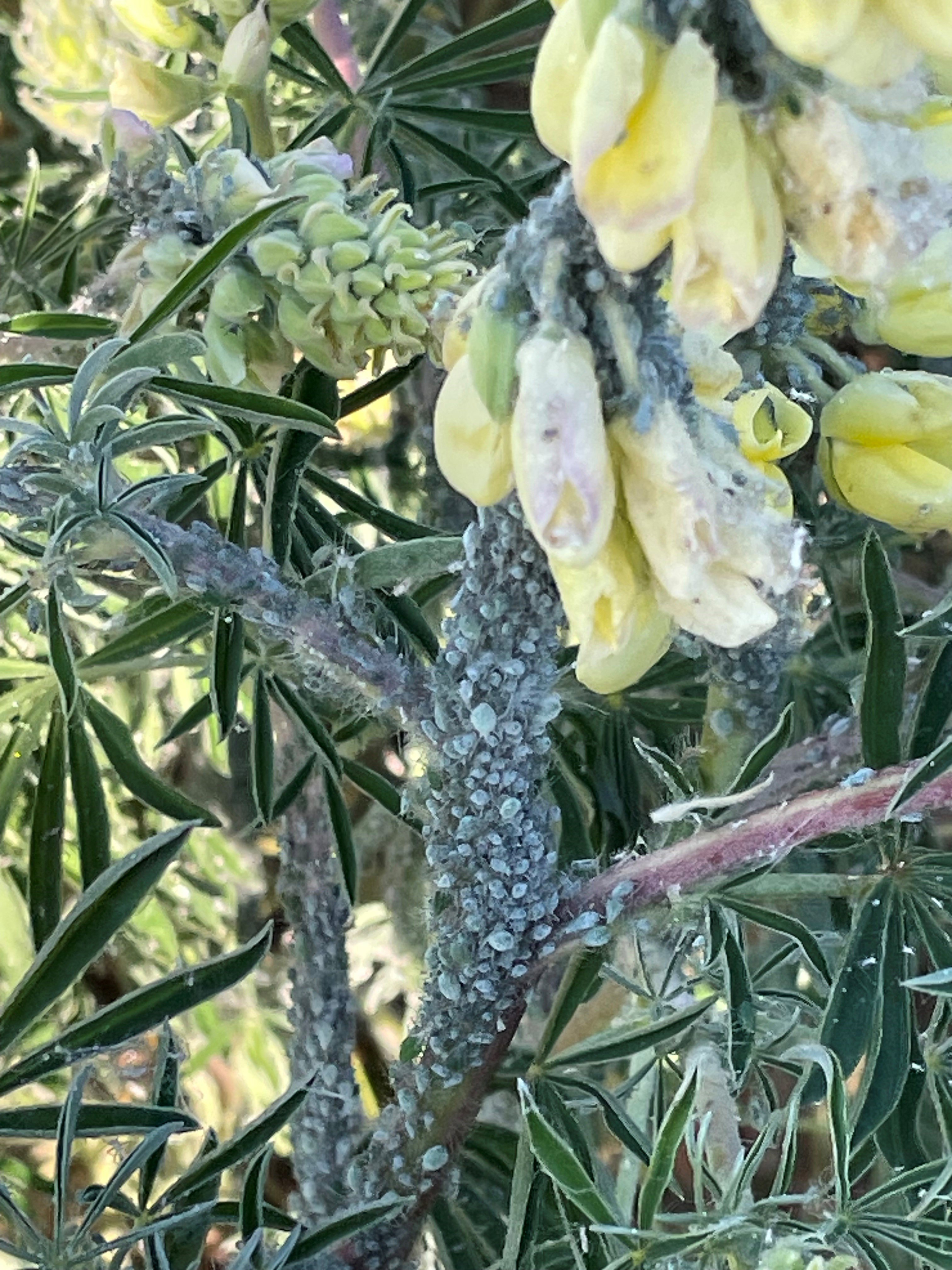
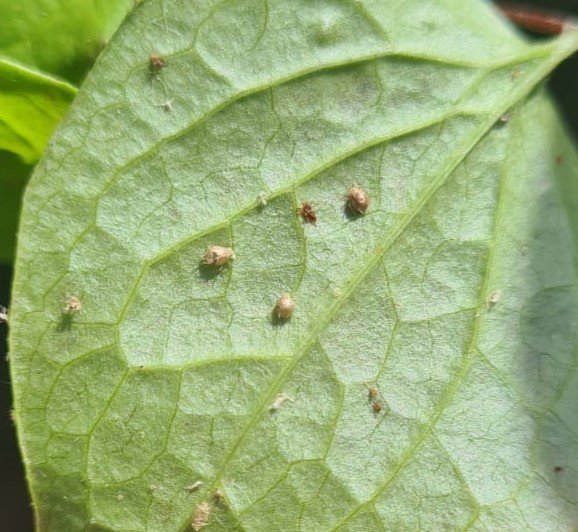
Control must be achieved before colonies and honeydew become visible. Spotting low levels of aphids on the underside of leaves can be difficult, it’s easier with aphids which colonise growing points and shoots. Often with very low aphid levels, plant symptoms are not obvious. Feeding can cause leaf mottling or chlorosis. The saliva of some aphid species can be phytotoxic to plants and as its injected into the plant can cause leaf and growing point distortion, helping to protect the aphid colonies within. Higher populations generate visible honeydew on leaves (followed by sooty mould development) and cast skins and aphid bodies become more prominent. Ant activity can also be associated with some aphid species, such as the black bean aphid (Aphis fabae), and eventually natural predators and parasites will become visible. Longer term, virus symptoms may become evident on plants as aphids can transmit several viruses including cucumber mosaic virus, tobacco mosaic virus, potato virus Y, and carnation latent virus.
As aphids only take to the wing under certain circumstances (usually in response to a high population density on the host plant) the use of yellow sticky traps (and water traps) to monitor populations is limited. Therefore, an adequate level of individual plant inspections when crop walking is important to pick up low levels. Indicator plants, which are prone to certain aphid species, can be used as an early warning strategy, for example Buddleia and Photinia can be prone to the melon and cotton aphid. A network of suction traps located around England provide early warning of aphids taking to the wing, useful for broadacre crop production, their use within ornamental crop production has yet to be ascertained.
As a result of the sporadic nature of crop infestation and the sheer speed of population development, reliance on biological pest control alone, especially with outdoor crops where the growing environment cannot be controlled, is not recommended. Use of the various commercially available aphid parasites in protected crops at the beginning of the season can be a good way to control low populations of aphid which may not be easy to see. Predators or parasites however should not be used as a curative treatment as crops can be quickly made unsaleable before aphid populations are brought under control. Six different aphid parasite species are now offered by biocontrol companies, sold alone or in mixtures, along with several predators including ladybirds, hoverfly larvae, lacewings, and midge larvae.
The available plant protection products with activity against aphids can be divided into conventional products, biorational products, and products exempt from the pesticide regulations. Conventional knockdown products can be used against colonies and include contact acting pyrethroids (which are also very persistent) and multiple mode of action products like Aphox. These products however should not be used against resistant aphid species. Conventional lifecycle breaker products are slow acting, need to be ingested and target specific life cycle stages, such products, in terms of aphid control, include Batavia, Mainman, and Sequoia. As a result of their activity, these products should be applied earlier in the season to gain maximum benefit.
Biorational products, are registered like the above conventional products and include Flipper, a soap concentrate, and Spruzit, a natural pyrethroid. These products tend to be contact acting with little or no persistency and therefore can be integrated in biological control programmes.
The last category are physically acting products which are not registered products and do not have a MAPP number. These include SB Plant Invigorator, an anionic surfactant and Protac, a silicon polymer. The manufacturers claim that these products are also compatible in biological control programmes.
A presentation listing the various common aphid species which impact ornamental crops and how to identify them.
A presentation covering the importance of crop monitoring, the available biocontrol agents for aphids, and how to optimise control strategies.
A presentation summarising a Harper Adams University PhD project.
A presentation summarising two Harper Adams University PhD projects.
A presentation detailing the various available products with activity against aphids and how to get the best from them.
The handout collating all the presentations from the ‘Aphid Management in Ornamental Crops’ Masterclass.